MH Blog

As prices and interest rates rise, and with fewer homes available on the market, homeownership can feel out of reach to many. Yet it's still one of the most reliable paths to building wealth. Your monthly home loan payments can help build equity over time, giving you a valuable asset.
If traditional housing seems unattainable, a manufactured home can offer a quicker path to homeownership. Manufactured housing offers the same features and benefits of traditional housing, often for less. In this article, we'll explore the viability and benefits of manufactured housing for new home buyers.
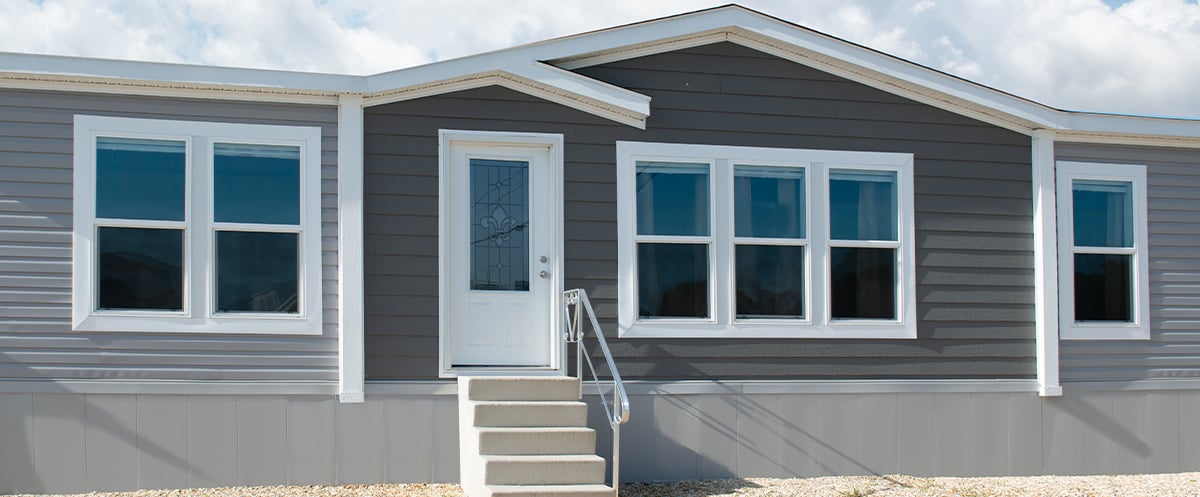
A "manufactured home" is a home that is built within a factory rather than at the location where it will be lived in. When fully constructed, the home is transported to a lot or land parcel where it is then set up and installed.
Manufactured homes are built to U.S. Department of Housing and Urban Development (HUD) standards, meaning they follow federal construction and safety requirements. While site-builders must navigate varying local codes, the HUD code provides a universal standard for energy efficiency and structural durability, ensuring high quality regardless of where the home is placed.
You can choose from a wide range of finishes, from basic to high-end. Manufactured homes are highly customizable, making it easy to find options you’ll love. Designs are modern, spacious, and comfortable for families of all sizes.
Manufactured homes are more affordable because they are built more efficiently. Building the home in a controlled facility eliminates many of the costs associated with traditional construction.
How much does a manufactured home cost? It varies depending on the size, layout, and finishes you select. Here are the typical prices:
To get the total cost, you’ll also need to include the transportation and utility setup costs. Transportation costs largely depend on the delivery distance and can range from $3,500 to $18,000.
Utility hookups vary depending on how far the home is from the mains and whether you need to install a septic system. Here is the typical cost to install a manufactured home:
Compared to traditional homes, manufactured homes are more affordable. Let’s say you buy a mid-range double-wide home for $125,000, and your total setup costs are $20,000. Not including the land, your investment comes to $145,000. That’s less than half the average U.S. home price of $385,000.
Many first-time homebuyers focus on the purchase price of a home or the monthly mortgage payment. You should also budget for these ongoing costs of homeownership:
Not all expenses will be the same each month. Some will be variable, like your heating and cooling costs. Although modern manufactured homes are energy efficient, you may pay more during the summer and winter months. Many financial experts recommend budgeting 1% to 4% of your home’s purchase price each year for maintenance.
The lower entry cost makes homeownership more attainable for first-time buyers. It means you can buy a home with a lower down payment with a conventional loan. Beyond conventional loans, several government-backed options may be available to you:
Are manufactured homes a good investment? They certainly can be. A typical new manufactured home installed today will last about 75 years, and it can hold its value or appreciate the same as a site-built home. Like all properties, long-term value depends on the location, installation quality, local housing demand, and how well you've maintained the home.
Home upgrades, like skirting and steps, are another important factor. Some dealers may choose lower-end options to keep the purchase price low. It's worth asking your dealer if upgrades are available. Quality skirting and steps can be added to your loan for just pennies per month, and the cost can be offset with energy savings, indoor comfort, and retained value for resale.
When you buy a manufactured home, you aren’t just buying a place to live. You’ll have a valuable asset that you can someday sell or pass on to your children. Every loan payment you make builds equity that can give you an advantage if you ever need a source of affordable financing. You may qualify to tap into that equity with a low-interest home equity loan or home equity line of credit (HELOC) for unexpected expenses, a major purchase, education costs, or other needs.
Should you buy a manufactured home? Consider your budget, how much you'll save, and the current inventory of homes for sale where you live. A manufactured home may allow you to start building equity in a home you own sooner and for far less. It’s an opportunity to turn your rent payments into home loan payments, with the same quality and livability as a site-built home.